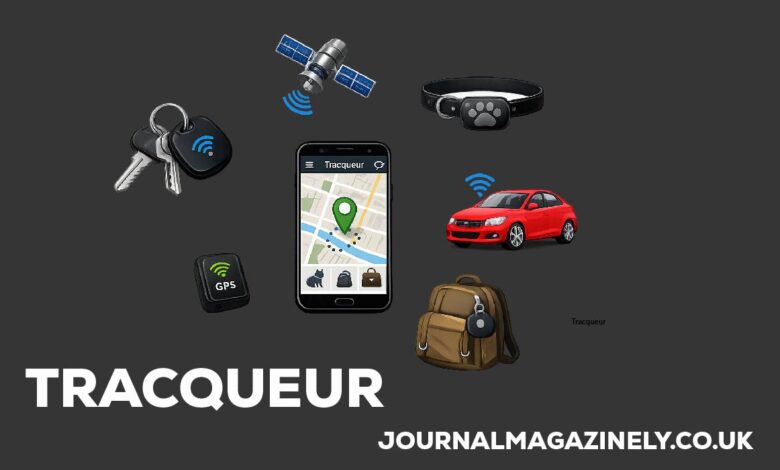
The word Tracqueur is usually understood online as a version of tracker, a word used for a device or system that helps follow location, movement, or activity. In many search results, the closest formal match is the French word traqueur, which translates to tracker, while English dictionaries also use tracker for both electronic devices and software that record information. Because of that, people who search “Tracqueur” are often looking for a practical explanation of modern tracking tools rather than a strict dictionary lesson.
Today, a Tracqueur can mean different things depending on context, but the most useful meaning for most readers is a tracking device or tracking system. It can help locate a car, keys, a bag, a bike, a pet, or even a connected device through an app or platform. In some online discussions, the word can also point to software that records digital activity, which is why the search intent around this keyword is mixed. A strong article must explain that clearly at the start so readers understand the main meaning without confusion.
That is why Tracqueur has become such a useful modern topic. People want simple tools that reduce stress, improve safety, and help them find what matters fast. Businesses want better visibility over vehicles and assets, while families want peace of mind when sharing locations or protecting important items. A good Tracqueur is not just about maps and dots on a screen; it is about better control, faster decisions, and smarter protection in everyday life.
What Tracqueur Means
In simple words, a Tracqueur is something that helps you keep track of where an object, vehicle, device, or person is. Sometimes it is a small hardware tag attached to an item. Sometimes it is a GPS unit installed in a car. In other cases, it works through a phone app that shares real-time location between trusted people. The main idea stays the same: it records location or activity and makes that information easy to check when needed.
This simple idea explains why the keyword is growing in practical importance. A person may lose house keys, forget a bag, worry about a parked motorcycle, or want to know whether luggage reached the correct place. A parent may want safe location sharing for a child during travel, while a business may need live visibility for delivery vehicles. In all these cases, the Tracqueur becomes a problem-solving tool that turns uncertainty into information.
It is also important to understand that not every Tracqueur works the same way. Some are made for nearby finding only, some are built for long-distance tracking, and some are designed for shared location through a trusted platform. This is why many people feel confused when comparing trackers. The word sounds simple, but the technology behind it can include GPS, Bluetooth, mobile networks, Wi-Fi support, encrypted device networks, and app-based sharing tools.
How a Tracqueur Works
A Tracqueur usually works in three basic stages. First, it finds a position or detects movement. Second, it sends that information through a network or device connection. Third, it displays the result on an app, dashboard, or web platform so the user can understand what is happening. This process sounds simple, but it is powerful because it turns physical movement into readable data that can be checked from almost anywhere.
When a Tracqueur uses GPS or GNSS, it determines where the device is by reading signals from satellites. After that, the tracker can send the result through cellular service, radio, or another communication channel to a server or connected device. Fleet and vehicle tracking systems use this model heavily because it allows live maps, route history, and operational monitoring. The same idea is also common in asset protection and stolen vehicle recovery systems.
Other Tracqueur systems use Bluetooth-based finding rather than full satellite tracking. Google’s Find Hub explains that compatible tracker tags can be attached to items like keys, backpacks, and bikes, and nearby Android devices can securely help detect their location through Bluetooth signals. Find Hub also supports actions such as playing a sound on a nearby lost item, while shared device access lets trusted friends or family help locate certain tagged belongings. This shows that modern Tracqueur systems now work through both direct hardware tracking and larger connected networks.
Main Technologies Behind Tracqueur
The most well-known Tracqueur technology is GPS, or more broadly GNSS, because it provides geographic position for vehicles and mobile assets. This is especially useful outdoors, where satellite signals are strongest and the map view can show where a car, truck, or object is located in real time. GPS-based Tracqueur systems are widely used in transport, anti-theft services, route tracking, and asset visibility. For many users, this is the first technology they think of when they hear the word tracker.
Another important Tracqueur technology is Bluetooth, which is very useful for short-range finding. Instead of acting like a full live GPS unit, a Bluetooth tag is often best for personal items such as keys, wallets, backpacks, or small accessories. Google’s Find Hub says compatible tags can use secure Bluetooth signals and nearby devices in the network to help identify the item’s location, while end-to-end encryption is used so only the owner can view the location data. This makes Bluetooth-based Tracqueur systems attractive for daily item recovery.
A Tracqueur may also rely on cellular networks, Wi-Fi support, sensors, and cloud software. Cellular service is important for real-time updates over longer distances, while Wi-Fi or nearby devices can improve usefulness in areas where GPS alone is not enough. On top of that, apps and dashboards turn raw signals into readable maps, alerts, trip history, battery details, and sharing controls. The real strength of a Tracqueur often comes from this combination, not from one technology alone.
Different Types of Tracqueur
One major type of Tracqueur is the vehicle tracker. This is the model many businesses and car owners use because it supports live location, route history, and operational awareness. A vehicle Tracqueur can help with stolen vehicle recovery, route monitoring, trip records, and fleet oversight. In business settings, it is especially valuable because it can improve dispatching, reduce uncertainty, and support safer or more efficient driving decisions.
Another common type is the personal item Tracqueur, which is built for everyday belongings. These devices are usually smaller and easier to attach to keys, bags, wallets, or luggage. Instead of heavy telematics, they focus on easy finding, nearby alerts, and app support. Google’s Find Hub specifically highlights tags for items like keys, backpacks, and bikes, showing how the market has moved toward simple consumer-focused trackers that solve small but frequent daily problems.
There are also family location systems, pet trackers, fitness wearables, and digital trackers. Google’s location-sharing tools show how people can choose to share live location in Maps, Find Hub, Family Link, or other Google services, while Cambridge also defines trackers as electronic devices or software that record physical activity. In online privacy discussions, a “tracker” can even mean web software that records browsing activity. So the Tracqueur family is broad, but the main search meaning still leans strongly toward location and item tracking.
Real Uses of Tracqueur in Daily Life
A Tracqueur is highly useful in daily life because many common problems are really location problems. A person may misplace keys at home, leave a backpack in a car, forget a wallet in an office, or worry about luggage during airport travel. In those moments, even a basic nearby-finding Tracqueur can save time and stress. When the item is larger or farther away, a GPS-based system can offer an even stronger advantage by showing location updates and movement history.
For families, Tracqueur systems are often more about reassurance than surveillance. Google’s location-sharing settings explain that users can share their real-time location with people they choose across services like Maps, Find Hub, Family Link, Messages, and Personal Safety. Google Maps also allows trip progress sharing and location notifications, which can help trusted contacts know whether someone reached a place safely. In real life, this makes a Tracqueur useful during school travel, road trips, late arrivals, and other everyday situations where simple visibility matters.
Businesses use Tracqueur technology more operationally. Vehicle and fleet systems can support route planning, location visibility, trip history, and asset control. Geotab’s definition of a GPS tracker highlights real-time localization, vehicle security, and driving behavior analysis, while practical fleet platforms also emphasize alerts and statistics. For deliveries, transport services, field teams, and equipment management, a Tracqueur becomes less about finding one lost thing and more about running a system with more discipline and less guesswork.
Main Benefits of Using a Tracqueur
The first big benefit of a Tracqueur is real-time awareness. Instead of waiting, guessing, or making repeated calls, you can often open an app and see where the item, vehicle, or shared device was last detected. That creates faster response in stressful situations. When something moves unexpectedly, a good Tracqueur can shorten reaction time, which is one of the biggest reasons these tools are valued for both personal protection and business efficiency.
The second major benefit is peace of mind. Many people do not use a Tracqueur because they lose things every day; they use it because they want a backup plan when something goes wrong. A tracker on keys, a shareable location link, or a vehicle monitoring system can reduce panic because there is at least one reliable way to check status. Google’s support pages also show that sharing can be controlled, stopped, or managed, which adds flexibility rather than forcing a one-size-fits-all system.
The third benefit is better decisions through history and alerts. Many Tracqueur systems do more than show a single point on a map. They can store route history, provide movement records, support geofence-style alerts, or show battery and last-seen information. That kind of data helps users understand patterns instead of reacting blindly. For businesses, it can improve planning and accountability, while for individuals it simply makes the tracking experience more useful and less stressful.
Limits and Challenges of Tracqueur
Even the best Tracqueur has limits, and one of the biggest is signal quality. GPS works best outdoors, but indoor spaces, tunnels, dense buildings, underground parking, or difficult coverage areas can reduce location quality. Bluetooth tags are also limited because they are not the same as long-range GPS systems. This means a buyer must understand the use case before choosing a device. A Tracqueur can be very effective, but it should never be imagined as perfect in every place and every moment.
Another challenge is power and connectivity. Portable trackers need battery life, and some real-time systems also need a SIM, mobile network, or other form of communication to send fresh updates. If a device runs out of power or loses network access, the live tracking experience becomes weaker. This does not make the Tracqueur useless, but it does mean owners should pay attention to charging habits, update intervals, battery design, and coverage in the places where they expect to use it.
A final challenge is wrong expectations. Some buyers think all trackers offer the same kind of live precision, but that is not true. A small Bluetooth tag on keys is not the same as a fleet-grade GPS box, and a family location-sharing app is not the same as a stolen vehicle recovery service. The Tracqueur category is broad, so disappointment often comes from buying the wrong type rather than from bad technology. The smart approach is to match the device to the exact problem you want to solve.
Tracqueur, Privacy, and Safety
Privacy matters a lot when using any Tracqueur. Google’s support pages make it clear that location sharing is off by default and only becomes active when a user chooses to share location in a supported service. They also explain that people you share with may be able to see your recent location, battery status, and in some cases arrival or departure information tied to location notifications. This shows why a Tracqueur can be helpful, but also why users should understand exactly what they are sharing and with whom.
Safety concerns are also one reason modern Tracqueur systems have improved. Android’s official help pages explain unknown tracker alerts, and Google’s own blog says Android users can receive automatic alerts if an unfamiliar tracker appears to be moving with them. The same guidance also describes a manual scan process and notes that users can get steps to locate the tracker and decide what to do next. This is an important part of the modern Tracqueur story because it shows that tracking technology must include anti-stalking protections, not only convenience.
Legal and workplace use also require care. CNIL, the French data protection authority, explains that access to geolocation data in employee vehicle systems should be limited to authorized personnel, that employees must be informed, and that geolocation can be excluded when it is not justified or becomes disproportionate. CNIL guidance also states that workers should be able to disable collection or transmission of geographic location outside working time in relevant cases. So a Tracqueur should always be used with a clear purpose, fair limits, and respect for privacy.
How to Choose the Right Tracqueur
The first step in choosing a Tracqueur is to decide what you want to track. If you want to find nearby personal items, a small tag and app-based network may be enough. If you want live vehicle monitoring, you need a stronger GPS-based setup with dependable updates. Also If your goal is family coordination, a trusted location-sharing platform may fit better than buying separate hardware. The right choice becomes easier when the purpose is clear from the start.
The second step is to compare the important practical features. Battery life, network support, app quality, durability, alert options, history logs, and sharing controls all matter. A strong Tracqueur should not only collect location but also present it clearly in a way the user can understand. Google’s Find Hub and Maps tools show how sound alerts, sharing settings, and multi-person access can improve usefulness, while fleet and GPS platforms show the value of reporting, route records, and notifications.
The final step is to think about privacy and long-term use, not just price. A cheap device can become a bad purchase if its app is weak, its battery is frustrating, or its privacy controls are unclear. A Tracqueur is best when it fits daily life smoothly and safely. That means checking who can see the data, how sharing can be stopped, what happens if the device is lost, and whether the system offers useful protections against unwanted tracking or misuse.
The Future of Tracqueur Technology
The future of Tracqueur technology is moving toward smarter and more connected systems. Google’s Find Hub already shows a model where phones, tracker tags, and shared devices work together through a broader device network instead of depending only on one direct connection. This makes lost-item recovery more practical for everyday users and turns tracking into a more integrated part of the connected device experience. The idea of a Tracqueur is no longer limited to one gadget; it is increasingly part of a wider ecosystem.
Precision is also improving. Recent coverage around Find Hub shows that support for technologies like Ultra Wideband is part of the direction for more exact close-range finding, especially for compatible tags and phones. At the same time, the service has expanded from device-only finding into a broader experience that includes people, accessories, and smarter location tools. This suggests that the Tracqueur of the near future will be easier to use, more accurate at short range, and more useful across daily situations.
Just as important, privacy and safety are becoming a bigger part of innovation. Unknown tracker alerts, manual scan tools, encrypted Bluetooth location systems, and user-controlled sharing settings show that companies now understand that tracking must be balanced with protection. The next stage of Tracqueur growth will likely reward systems that combine convenience with trust. In practical terms, that means better battery life, stronger networks, clearer permissions, smarter alerts, and better safety features for ordinary users.
Conclusion
Tracqueur is a simple word with a broad modern meaning. In most practical use cases, it refers to a tracker or tracking system that helps locate and monitor vehicles, items, devices, or shared locations. The search term can be a little mixed because some results point to software tracking and some point to physical devices, but the strongest everyday meaning is still clear: a Tracqueur helps people know where something is and what is happening.
That is why Tracqueur matters so much in modern life. It supports anti-theft use, everyday item recovery, family coordination, business visibility, and better decision-making through location history and alerts. At the same time, the topic cannot be separated from privacy, consent, and responsible use. The best Tracqueur is not the one with the most hype, but the one that fits the real problem, uses trusted controls, and respects the person behind the data.
As tracking tools continue to improve, Tracqueur will become even more common in homes, vehicles, travel, and connected digital systems. But the basic promise will remain the same: less guessing, less stress, and more useful information when something important needs to be found or protected. That balance of convenience, safety, and responsibility is what makes Tracqueur an important keyword and an even more important real-world tool.
For more information, visit Journal Magazinely